What do you need to survive a long power outage in Houston?
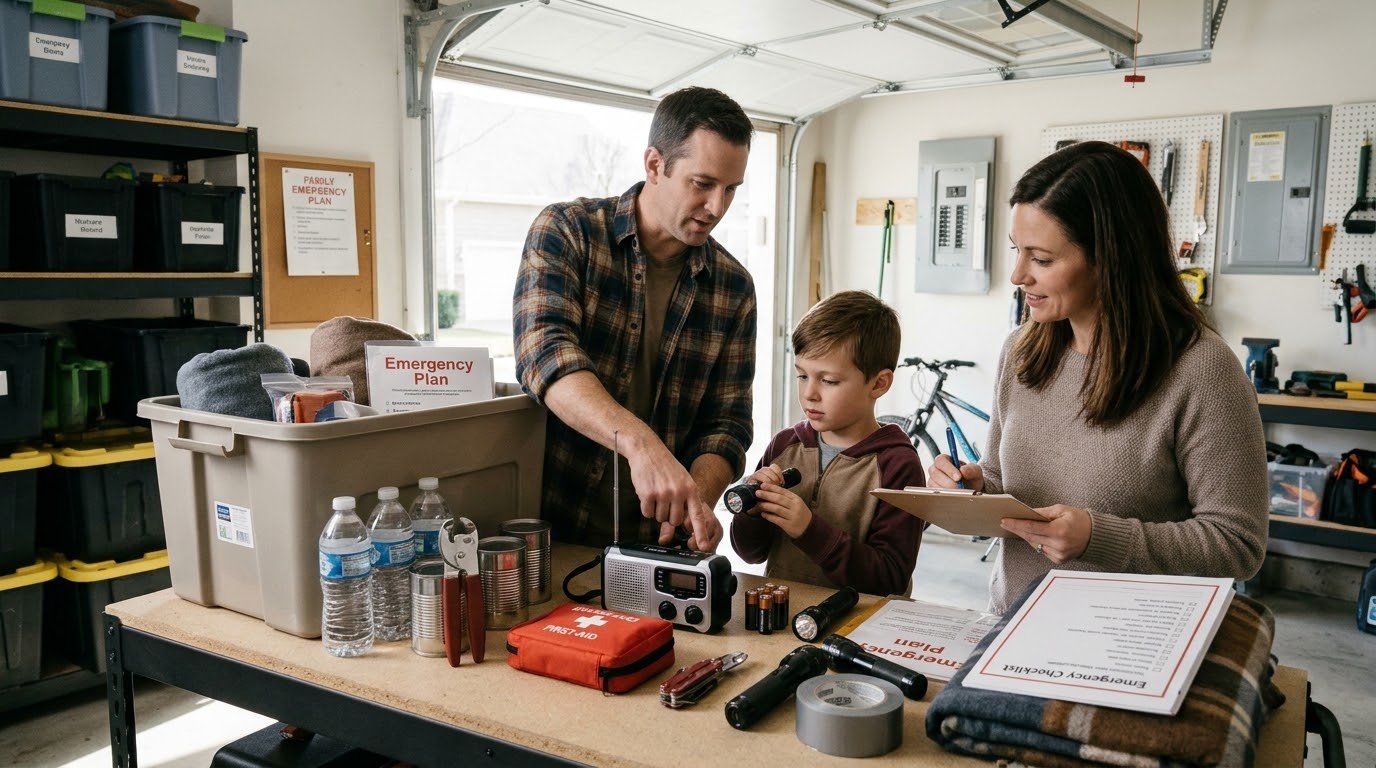
Water, shelf-stable food, light, a safe backup power source, a way to stay cool or warm, medications, and a plan to stay informed. Build it in layers: 72 hours first, then 2 weeks, then 90 days.
Between hurricanes, summer grid strain, and the occasional hard freeze, Houston homeowners know the lights can go out and stay out. Some storms have left neighborhoods without power for days, and a few for well over a week. Nobody expects 90 days without power, but preparing for the extreme version is the easiest way to be comfortable in the likely one.
The trick is not to buy everything at once. Build your kit in three layers, and each layer makes the next one cheaper and easier. Official guidance from Ready.gov follows the same idea: start with the basics, then scale up.
A note on the links: The shopping links below go to search results at big national retailers, not to specific products, so they won't go out of date when an item sells out. Compare reviews and prices before you buy. We aren't endorsing any brand or store.
How the 90-Day Plan Works
Layer | Goal and cost to start |
|---|---|
Layer 1: 72 hours | Get through a typical storm or freeze comfortably. Low cost, mostly things you already own. |
Layer 2: 2 weeks | Cover a major hurricane or grid failure. Moderate cost. |
Layer 3: 90 days | Be truly self-reliant. Higher cost, but built over months. |
Aim to finish Layer 1 this month, Layer 2 by the start of next hurricane season (June 1), and add Layer 3 gradually.
1. Water
You need about 1 gallon per person per day for drinking and basic hygiene, plus extra for pets. Ready.gov's water guidance recommends at least a 2-week supply where possible.
- 72 hours: 3 gallons per person (store-bought jugs are fine).
- 2 weeks: 14 gallons per person, in stackable containers.
- 90 days: Don't try to store 90 gallons per person. Store 2 weeks and add a way to make more: a gravity filter and water purification tablets, plus a rain barrel for non-drinking water (flushing, washing).
Item | Where to look |
|---|---|
Stackable water storage containers | Home Depot · Walmart · Amazon |
Gravity water filter | |
Water purification tablets | |
Rain barrel |
2. Food
Choose foods you actually eat, so you can rotate them and never waste them. Keep a manual can opener with your supplies.
- 72 hours: Canned meats and vegetables, peanut butter, crackers, granola bars, dried fruit, shelf-stable milk.
- 2 weeks: Add rice, pasta, canned soups and beans, oatmeal, and comfort foods your family likes.
- 90 days: Bulk staples (rice, beans, oats, flour, salt, sugar), freeze-dried meals, multivitamins, and pet food. Stock in sealed buckets or Mylar bags for long life.
- Fridge and freezer: Keep a thermometer inside. FoodSafety.gov has guidance on what to keep and what to toss after an outage.
Item | Where to look |
|---|---|
Freeze-dried and long-term food | |
Food-storage buckets with gamma lids | |
Mylar bags and oxygen absorbers | |
Manual can opener | |
Fridge/freezer thermometer |
3. Cooking Without Power
Never cook with a charcoal grill, camp stove, or generator inside the house, garage, or screened patio. That is a carbon monoxide risk.
- 72 hours: A propane or charcoal grill you already own, plus fuel.
- 90 days: A two-burner propane camp stove and enough fuel, plus a backup like a small butane stove. Store fuel safely outdoors, away from the house.
Item | Where to look |
|---|---|
Propane camp stove | Home Depot · REI · Walmart |
Propane tanks and refills | |
Camp cookware and utensils |
4. Light
Skip candles. They're a fire hazard. LEDs are cheap and safe.
- 72 hours: One flashlight per person and a few battery lanterns. Stock extra batteries in the sizes you use.
- 2 weeks: Rechargeable lanterns and headlamps, plus a solar or hand-crank option.
- 90 days: Solar-rechargeable lanterns, a battery charger with rechargeable batteries, and a stash of backups.
Item | Where to look |
|---|---|
LED lanterns | |
Headlamps | |
Solar-rechargeable lanterns | |
Batteries and rechargeable chargers |
5. Backup Power
This is the biggest purchase, so match it to your needs. Phones, medical devices, a fridge, and a few fans call for a battery power station. Whole-home comfort calls for a generator.
Generator safety is non-negotiable. Run generators outdoors only, at least 20 feet from the house, with the exhaust pointed away from windows and doors. Never in a garage, even with the door open. The CDC's carbon monoxide guidance covers the basics.
- 72 hours: Power banks for phones, plus a car charger.
- 2 weeks: A portable battery power station (some pair with solar panels) to run phones, fans, a CPAP, or a small fridge.
- 90 days: A solar-ready power station and folding solar panels, or a portable generator with safe fuel storage and a properly installed transfer switch or interlock. Have an electrician install it. Don't backfeed your house through an outlet.
Item | Where to look |
|---|---|
Portable power banks | |
Portable power stations | Home Depot · Costco · REI |
Folding solar panels | |
Portable generators | Home Depot · Lowe's · Costco |
Approved fuel cans | |
Heavy-duty outdoor extension cords |
6. Staying Cool (and Warm)
In Houston, heat is the bigger danger for most of the year, but cold snaps matter too.
- Cooling: Battery-powered and rechargeable fans, light-colored curtains and window shades, cooling towels, and a plan to go somewhere cooler if temperatures get dangerous.
- Warming: Wool or thermal blankets, sleeping bags rated for cold, layers, hand warmers. If you use a portable heater, it must be rated for indoor use, and you'll need working carbon monoxide detectors.
Item | Where to look |
|---|---|
Rechargeable fans | |
Cooling towels | |
Blackout/insulating curtains | |
Wool blankets and sleeping bags | |
Carbon monoxide detectors (battery) |
7. Health, Hygiene, and Sanitation
- 72 hours: A first-aid kit, a week or more of prescriptions (talk to your doctor and pharmacist about extra supplies), over-the-counter basics, and sanitation items.
- 2 weeks: Add backups of glasses and contacts, baby and pet supplies, feminine products, and sanitizer.
- 90 days: Add heavy-duty trash bags, bleach for sanitizing, disinfecting wipes, bucket toilet supplies, and hand-washing stations. Refrigerated medications (like insulin) need a plan. Ask your doctor.
Item | Where to look |
|---|---|
First-aid kits | |
Heavy-duty trash bags | |
Emergency toilet kits | |
Hand sanitizer and wipes |
8. Communication and Information
- 72 hours: Charged phones, power banks, and a car charger.
- 2 weeks: A battery or hand-crank NOAA weather radio so you can get alerts without cell service.
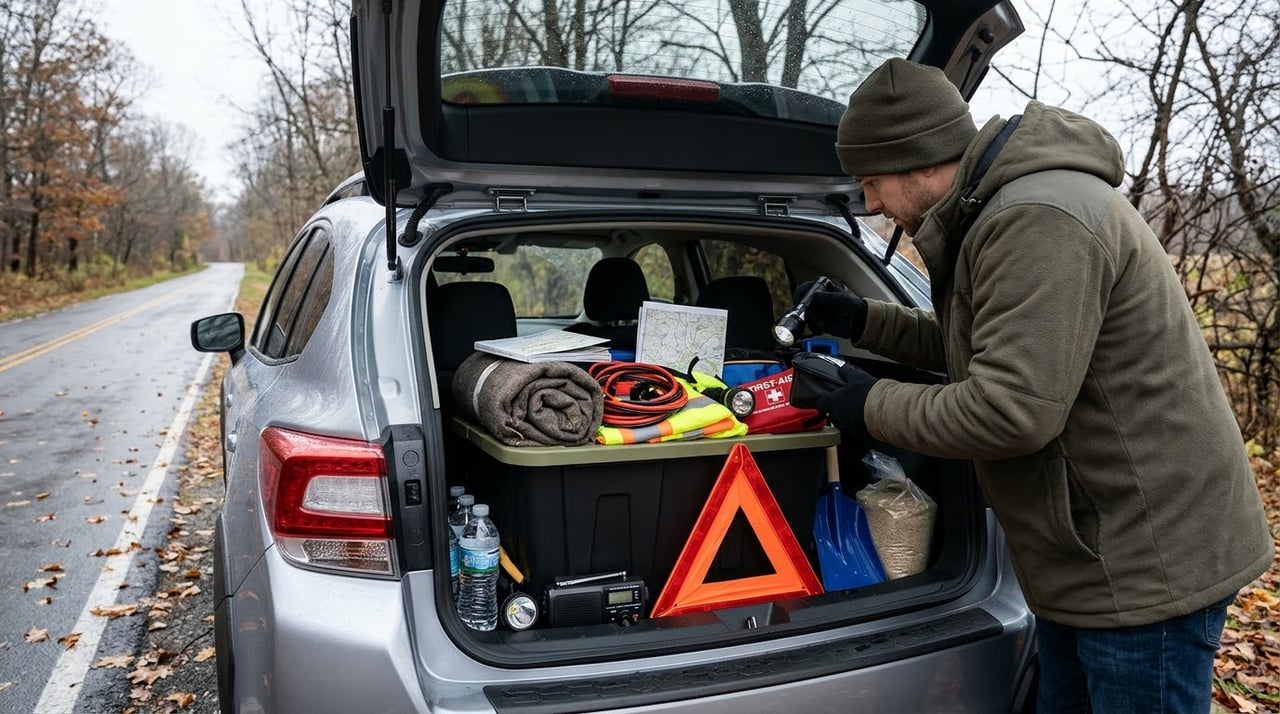
- 90 days: Add a two-way radio set for your family and neighbors, plus a printed list of important phone numbers and a paper map.
Item | Where to look |
|---|---|
NOAA weather radios (hand-crank/solar) | |
Two-way radios |
9. Documents, Cash, and Home Basics
- Keep cash in small bills. ATMs and card readers stop working without power.
- Store copies of your IDs, insurance policies, and deed or lease in a waterproof bag, plus a digital copy in the cloud or on a USB drive.
- Keep a full tank of gas in your vehicles. Gas pumps need electricity too.
- Learn how to manually open your garage door.
- Take photos of your home and belongings for insurance records.
Item | Where to look |
|---|---|
Waterproof document bags | |
Fire-resistant safe | |
Multi-tool, duct tape, work gloves, tarps |
A Simple Rollout Schedule
- This weekend: Water (3 days), flashlights, batteries, power banks, first-aid kit, cash.
- Next 30 days: Two weeks of food and water, weather radio, camp stove and fuel, fans, CO detectors.
- Days 30 to 90: Power station or generator, water filtration, bulk food staples, sanitation supplies.
- Every 6 months: Check expiration dates, rotate food, test batteries, and run your generator or power station.
Frequently Asked Questions
How long should a Houston family be prepared to go without power?
Plan for at least two weeks, since that covers a major hurricane or a significant grid failure. A 90-day supply is for people who want to be fully self-reliant, and you can build up to it gradually.
What's the first thing to buy for a power outage?
Start with water, flashlights and batteries, a phone power bank, and a first-aid kit. They're inexpensive and cover most short outages.
Is it safe to run a generator at home?
Yes, if you run it outdoors, at least 20 feet from the house, never in a garage, and have working carbon monoxide detectors inside. Hire a licensed electrician to install any transfer switch.
Be Ready for Whatever Comes Next
Being prepared is part of being a great homeowner, and it makes your home more comfortable and more valuable. Whether you're staying put or thinking about your next move, we're happy to help.
Ryan Adams, The Adams Group at Real, serving Houston, Fort Bend County, and the surrounding communities. Reach out for a free, no-pressure conversation.